Awareness & Engagement Campaigns
Beyond awareness, toward measurable change
Effective campaigns don’t stop at visibility — they shape behaviors, rebuild trust, and enable communities to adopt safer, healthier practices.
Context / Challenge
Communities often know the what but lack the why and how of behavior change. Donors and governments also need assurance that awareness efforts translate into measurable outcomes, not just impressions.
Approach
Designed and implemented integrated multi-channel campaigns, blending ATL (national TV, radio, digital media) with BTL (community dialogues, market activations, peer-to-peer outreach). Campaigns were tailored with audience insights and social and behavior change communication (SBCC) principles to bridge knowledge with action.
Campaigns engaged millions across Indonesia, driving measurable uptake of health and sanitation practices, amplifying donor visibility, and strengthening community resilience. Beyond awareness, they demonstrated that communication can be a catalyst for systemic change.
Impact
Campaigns engaged millions across Indonesia, driving measurable uptake of health and sanitation practices, amplifying donor visibility, and strengthening community resilience. Beyond awareness, they demonstrated that communication can be a catalyst for systemic change.
Highlight
Global and National Awearness Campaign
These campaigns demonstrated how coordinated advocacy and creative engagement from grassroots storytelling to global platforms can raise awareness, build political will, and strengthen commitments to protect children’s right to survival.
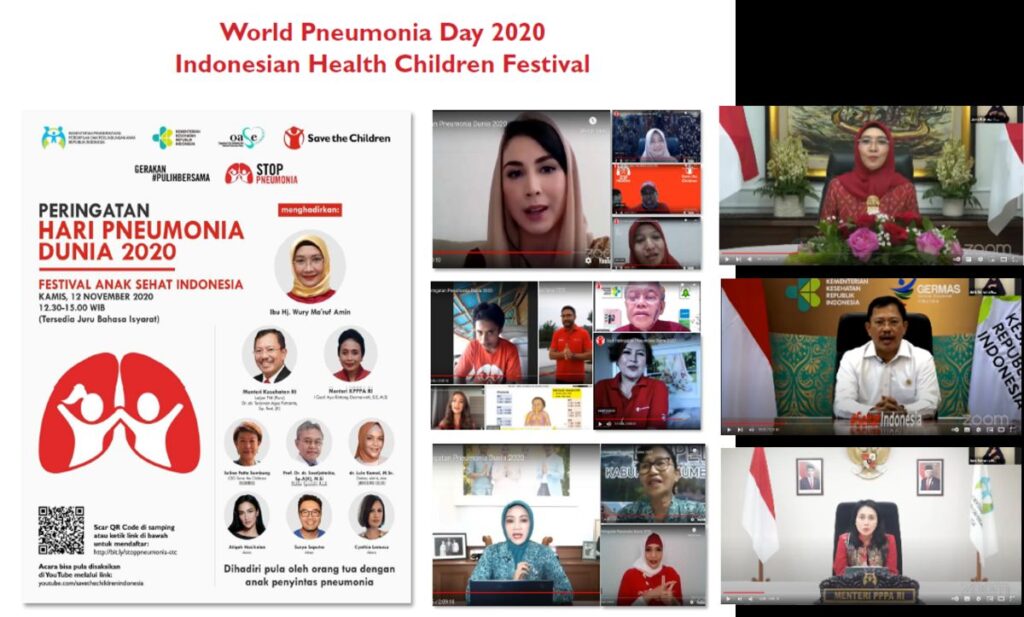
During the Covid-19 pandemic, STOP Pneumonia marked World Pneumonia Day (WPD) 2020 with a high-profile campaign. The event gathered stakeholders from all levels and featured the Wife of the Vice President, the Minister of Health, the Minister of Women’s Empowerment and Child Protection, 17 wives of ministers, and two wives of governors as campaigners to amplify the call to stop pneumonia.
The campaign was further strengthened by celebrities who spread the message through their social media platforms and by parents who shared real stories of their children’s fight against pneumonia. Pfizer’s sponsorship highlighted the value of public–private partnerships in supporting the Sustainable Development Goals, particularly the commitment to build strong collaborations for lasting impact.
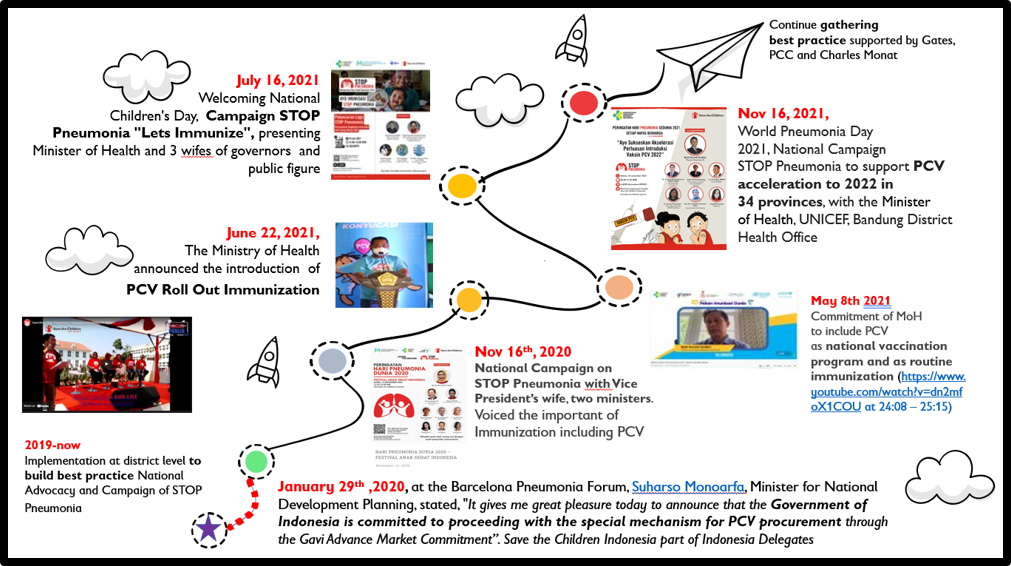
- Journey to PCV Rollout and Routine Immunization
The road to protecting children from pneumonia was not a single event, but a journey of persistence and collaboration. From the very beginning, the STOP Pneumonia campaign consistently supported the Ministry of Health in strengthening immunization programs—raising awareness among parents, communities, and decision-makers about the life-saving importance of vaccines like PCV (Pneumococcal Conjugate Vaccine). At the national level, the campaign worked alongside the Ministry to engage ministers, governors’ representatives, and public figures. At the district level, it partnered with health offices and village midwives to ensure children in remote areas could catch up on their missed immunizations—even during the Covid-19 pandemic.Each milestone along this journey—whether a public pledge, a policy commitment, or a grassroots immunization drive—reflected the campaign’s steady collaboration with the Ministry of Health. Together, these efforts accelerated the introduction of the PCV vaccine and paved the way for its inclusion in the Ministry’s Basic and Complete Routine Immunization program, protecting thousands of children across Indonesia.
Highlight
Public Diplomacy - YCCP-SMEC International (DFAT/Australian Aid)
Public diplomacy initiatives with SMEC International for Australian Aid (DFAT) leveraged storytelling and civil society engagement to advance inclusive development narratives, a strategy exemplified by the Australia-Indonesia Partnership for Sanitation. This cornerstone project was designed to help Indonesia achieve its Universal Access goal for sanitation in low-income communities. While it pioneered an innovative output-based aid model that dramatically expanded critical wastewater infrastructure from 11 to 43 districts, its true success hinged on a multi-faceted engagement campaign.
The campaign fostered deep community ownership by mobilizing civil society through grassroots ‘sosialisasi’ meetings, empowering youth as ‘Agents of Change’ in schools, and shaping the public narrative through strategic media outreach.
This holistic approach delivered a powerful dual impact: the successful construction of vital sanitation systems and the cultivation of lasting behavioral change, embedding the value of health and environmental stewardship within the very fabric of communities and local governments.
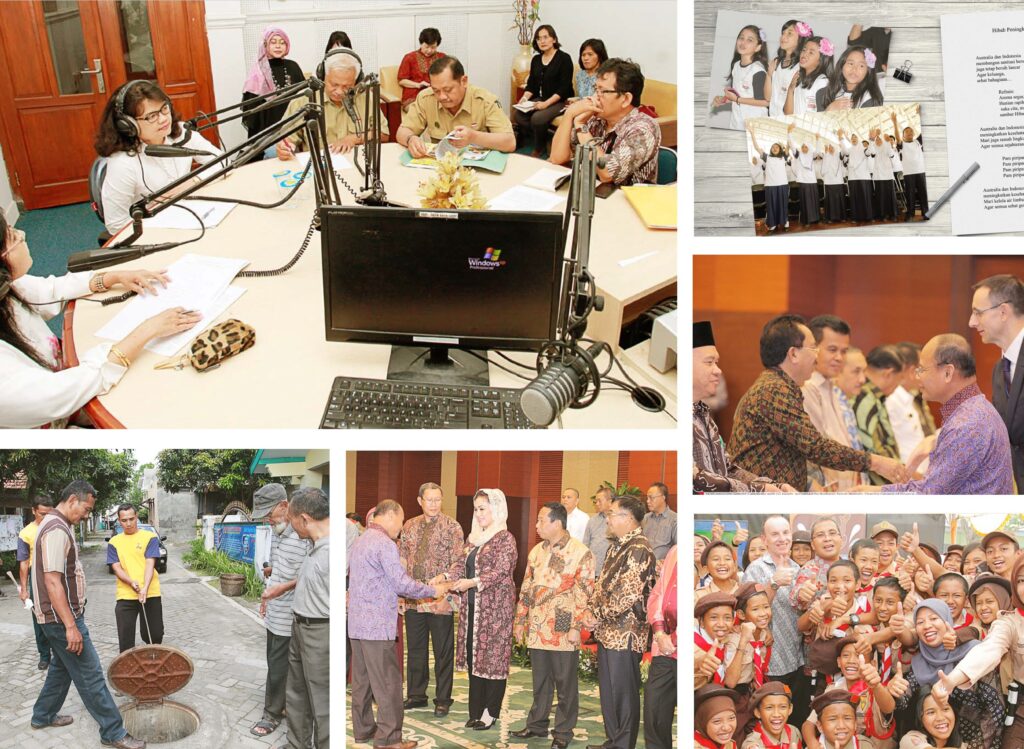
Location: Jakarta, Cimahi, Palembang, Tebing Tinggi, Solo, Jogjakarta, Banjarmasin, Samarinda, Makasar, Gresik, dan Denpasar
Highlight
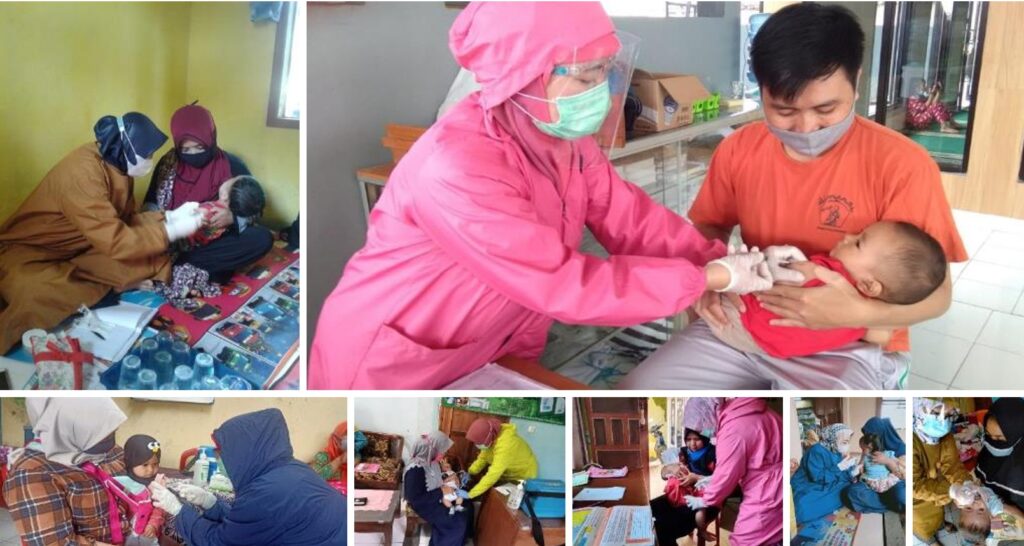
Catching Up on Immunization: Reaching 2,100 Children in 100 Villages during the Covid-19 Pandemic
When the Covid-19 pandemic struck, routine immunization services were among the first to be disrupted. Lockdowns and restrictions meant fewer families could travel to public health centers (PHCs), leaving many children under five without the protection they needed against preventable diseases.
To close this gap, the STOP Pneumonia program stepped in. From February to March 2021, working hand in hand with the District Health Office (DHO) and 21 PHCs, the program launched a crash immunization campaign that brought services directly to communities. Following strict health protocols, teams of 100 village midwives and 500 community health cadres traveled across 100 villages, reaching families in remote areas who otherwise had no access.
By the end of the campaign, 2,100 children had finally received the vaccines they had missed. For many parents, it was a moment of relief knowing their children were now better protected despite the challenges of the pandemic.