Event Design & Knowledge Exchange
Where visibility meets influence
Events are not just moments; they are platforms for convening, consensus, and change.
Context / Challenge
Development priorities often struggle to gain momentum without both public visibility and stakeholder ownership. Donors, governments, and civil society require spaces where dialogue can turn into commitment.
Approach
Designed and facilitated high-level conferences, policy dialogues, learning forums, and grassroots mobilization events that doubled as advocacy platforms. Each event was structured to elevate evidence, engage media, and give space for community and youth voices alongside decision-makers.
Impact
Positioned donors at the center of national and community dialogue, built cross-sector partnerships, and mobilized communities for collective action. These events went beyond visibility to anchor development agendas in policy commitments and shared ownership.
Highlight
Demand Activator Training on Sales & Marketing of WASH Products
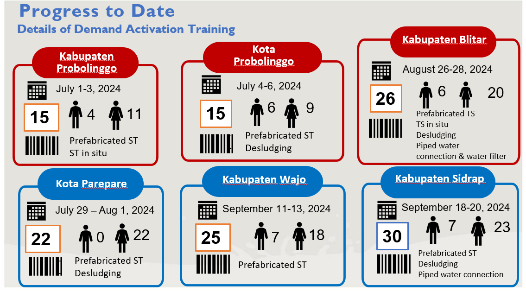
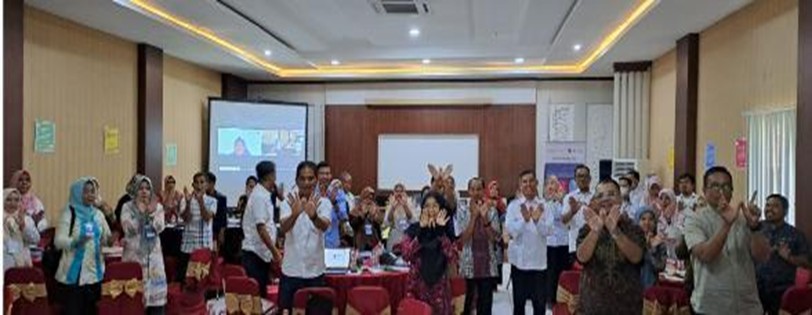
Between July and September 2024, 136 community representatives in East Java and South Sulawesi were trained as Demand Activators (DAs), gaining practical sales and marketing skills to promote safe water and sanitation products. The training, conducted in collaboration with the Ministry of Health, applied a market-based approach that strengthened local WASH entrepreneurship by integrating demand activation strategies and self-employment skills.
As a result, participants enhanced their sales techniques, deepened household engagement, and expanded the promotion of WASH products in their communities. Post-training monitoring confirmed the program’s contribution to driving behavior change, increasing access to safe water and sanitation solutions, and fostering sustainable, community-led demand for WASH services.
Highlight
From Jakarta’s Air Pollution to COP26: A Marathon of Advocacy Putting Childhood Pneumonia on the Agenda
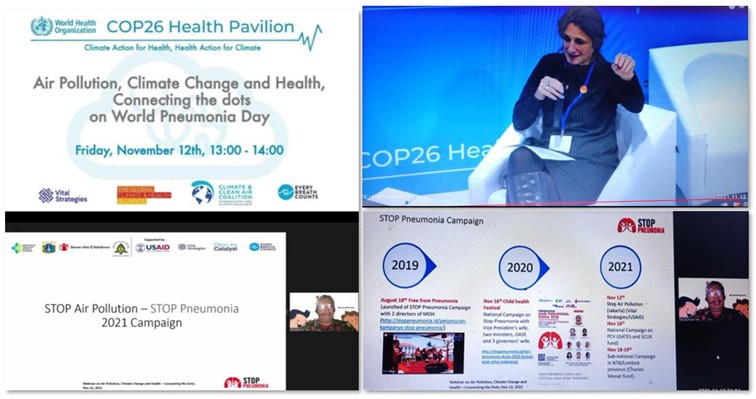
On World Pneumonia Day, 12 November 2021, the issue of childhood pneumonia moved from city streets to the global stage. In a single marathon day of action, pneumonia advocacy sprinted from a city campaign to regional collaboration and a global climate platform—amplified by high-level voices from governors, CEOs, and global health leaders. This momentum demonstrated how coordinated advocacy can turn local efforts into global influence.
Morning – Jakarta
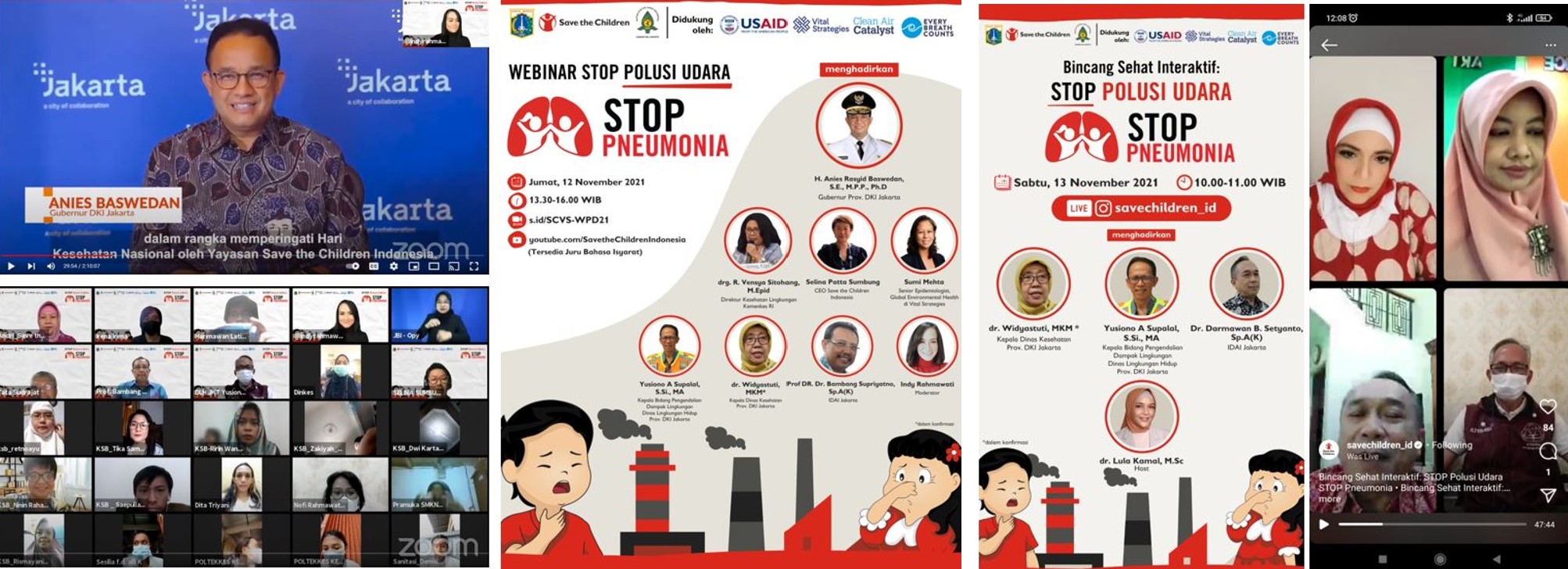
The “Stop Air Pollution, Stop Pneumonia” campaign mobilized the Governor of Jakarta, government agencies, professional associations, universities, celebrities, and community groups. Activities included a webinar with 300+ participants, a live Instagram talk show with 863 viewers, and social media outreach that reached nearly 7 million people—highlighting the link between air pollution and childhood pneumonia.
“Air pollution is a silent threat that often leads to pneumonia in children. This momentum must drive collaboration to improve air quality and protect children’s health. Jakarta stands committed: Stop Air Pollution, Stop Pneumonia.”
— Anies Baswedan, Governor of Jakarta
Afternoon – Asia Regional Dialogue
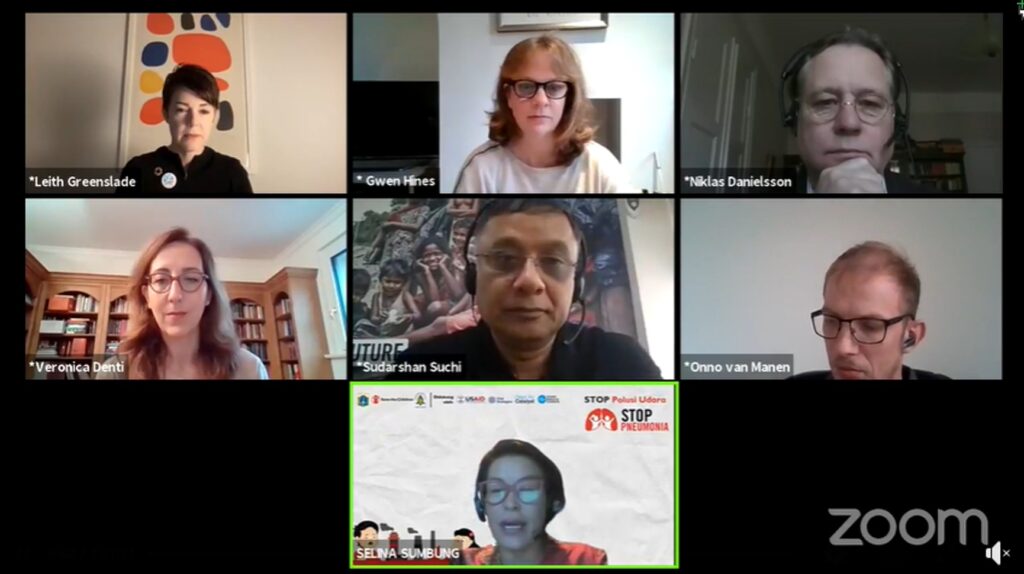
Save the Children’s Asia Regional Office convened a high-level panel on pneumonia and PCV rollout. The event brought together global and regional leaders: Gwen Hines, CEO, Save the Children UK, Onno van Manen, Country Director, Save the Children Bangladesh, Sudarshan Suchi, CEO, Save the Children India, Leith Greenslade, Coordinator, Every Breath Counts Coalition, Niklas Danielsson, Senior Immunization Specialist, UNICEF HQ Veronica Denti, Senior Program Manager, New Vaccine Programs, Gavi Alliance, Moderated by Selina Sumbung, CEO, Save the Children Indonesia.
The panel attracted 9,900 viewers across Indonesia, India, and Bangladesh, generating momentum around lessons learned, regional challenges, and commitments to accelerate PCV adoption.
Evening – Global Stage at COP26
At the UN Climate Change Conference (COP26) in Glasgow, Save the Children Indonesia presented the Jakarta campaign at the Health Pavilion. The session on air pollution, climate change, and child health spotlighted Indonesia’s advocacy as a best practice, connecting local realities with regional collaboration and the global climate agenda.